Manitowoc Ice Machine Troubleshooting: A Comprehensive Guide
Accessing downloadable service manuals, containing sequence of operations and service data like batch times and weights, is crucial for effective troubleshooting and repair procedures.
Understanding the Basics
Manitowoc ice machines, like all refrigeration systems, rely on a delicate balance of components working in harmony. Successful troubleshooting begins with grasping fundamental principles – the refrigeration cycle, water flow, and the control system’s logic. Before diving into specifics, familiarize yourself with the machine’s operational sequence, often detailed within the service manual.
Understanding that a significant portion of the refrigerant charge (around 75%) is dedicated to the harvesting process is key; low refrigerant doesn’t necessarily halt ice production immediately, but will impact discharge temperatures during harvest. Recognizing that different Manitowoc generations exhibit unique vulnerabilities – like older models prone to pressure switch failures or those with control boards susceptible to sticky relays – streamlines diagnosis.
Ultimately, a methodical approach, starting with board diagnostics, cleanliness checks, and visual inspection of ice plates, coupled with observing a full cycle, forms the foundation of effective Manitowoc ice machine maintenance.
Importance of the Service Manual
The Manitowoc service manual is absolutely indispensable for effective troubleshooting. It provides detailed sequence of operations, outlining each step of the ice-making cycle, allowing technicians to pinpoint deviations from normal function. Crucially, it contains specific service data – batch times, ice weights, and precise system pressures – essential for accurate diagnosis.
Without the manual, determining proper operating parameters becomes guesswork. Knowing the correct pressures at various points in the cycle, for example, is vital for assessing refrigerant charge and harvest efficiency. The manual also details component locations, wiring diagrams, and error code interpretations, saving valuable time and preventing misdiagnosis.
Downloading these manuals is often possible, providing a readily available resource for both routine maintenance and complex repairs, ensuring optimal machine performance and longevity.
Identifying Your Manitowoc Ice Machine Model
Accurate model identification is the foundational step for effective troubleshooting and obtaining the correct service documentation. Manitowoc machines span numerous generations, each with unique components and potential weak points – like pressure switch issues in older models or control boards with sticky relays in specific year ranges.
The model number is typically found on a data plate affixed to the machine’s exterior, often inside the front panel or on the side. This number is critical when downloading the appropriate service manual, as manuals are model-specific. Using the wrong manual can lead to incorrect procedures and potentially damage the unit.
Having the correct model number also allows for precise parts ordering and ensures compatibility, streamlining the repair process and minimizing downtime. Proper identification unlocks access to tailored troubleshooting guidance.

Common Issues & Troubleshooting Steps
Begin by checking the control board’s error messages, ensuring cleanliness, inspecting ice plate condition with a flashlight, and observing a full cycle.
Water Quality & Filtration
Maintaining optimal water quality is paramount for Manitowoc ice machine performance and longevity; impurities significantly contribute to operational issues. Scale buildup, stemming from hard water, restricts water flow and reduces cooling efficiency, impacting ice production. Regular filter replacement, adhering to the manufacturer’s recommendations detailed in the service manual, is non-negotiable.
Poor water quality also accelerates component wear and tear, particularly affecting water level probes and ice thickness probes. Consistent monitoring of water hardness and TDS (Total Dissolved Solids) levels is advisable. Consider implementing a water softening system if your water supply consistently exhibits high mineral content. Neglecting water filtration often manifests as cloudy ice or unusual tastes, signaling a need for immediate attention and filter changes. Always consult the service manual for specific filtration guidelines related to your model.
Cleaning Procedures & Potential Problems
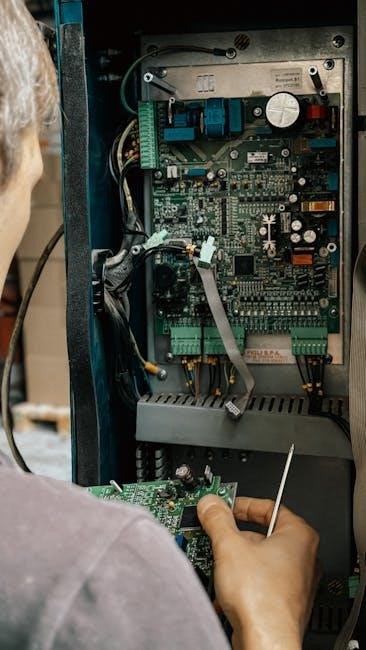
Regular cleaning is vital, but improper procedures can induce issues; residual cleaner is a frequent culprit. Thorough rinsing after cleaning is essential to prevent contamination of probes and sensors, particularly the ice thickness and water level probes. These probes are susceptible to erratic readings if cleaner residue remains, leading to inconsistent ice production or machine shutdowns.
The service manual outlines approved cleaning agents and procedures – strictly adhere to these guidelines. Many service calls stem from cleaning-related problems, often resolved by replacing problematic probes as part of routine maintenance. Observing a full cycle after cleaning helps identify any lingering issues. If problems persist after cleaning and probe replacement, consult the manual for further diagnostic steps or seek professional assistance.
Residual Cleaner Issues: Probes & Sensors
The most common cleaning-related fault involves residual cleaner affecting probe accuracy. Specifically, the ice thickness probe and water level probe are prone to malfunction if not thoroughly rinsed post-cleaning. This residue causes “wacky” behavior, generating false signals that disrupt the ice-making cycle. Symptoms include inconsistent ice thickness, erratic harvest cycles, or complete machine failure.
Often, simply allowing the machine to dry completely after cleaning, or initiating a cycle after drying, resolves the issue. However, proactive replacement of these probes during routine maintenance is highly recommended, as they are frequently problematic after cleaning. The service manual details probe locations and testing procedures, aiding in diagnosis and replacement. Prioritize complete rinsing to avoid these preventable issues.
Ice Thickness Probe Malfunctions
A malfunctioning ice thickness probe is a frequent cause of ice-making problems. If the probe sends incorrect readings, the machine may prematurely terminate the harvest cycle, resulting in thin or partial ice sheets. Conversely, it might continue building ice beyond the desired thickness, leading to operational inefficiencies and potential damage.
Troubleshooting involves visually inspecting the probe for damage or corrosion and verifying its electrical continuity using a multimeter, referencing the service manual for correct resistance values. Residual cleaner buildup is a common culprit, necessitating thorough cleaning or probe replacement. Observing a full harvest cycle and noting when the probe signals termination can pinpoint the issue. Accurate probe function is vital for consistent ice production.
Water Level Probe Malfunctions
Similar to the ice thickness probe, the water level probe’s accuracy is paramount for proper operation. A faulty probe can cause the machine to overfill or underfill the water trough, disrupting the freezing process and potentially leading to water wastage or incomplete ice formation. Incorrect readings can also trigger error codes and halt production.
Diagnosis begins with a visual inspection for physical damage and a continuity test using a multimeter, comparing results to the specifications outlined in the service manual. Residual cleaning chemicals frequently interfere with probe functionality, requiring meticulous cleaning or outright replacement. Monitoring the water level during a fill cycle and correlating it with the probe’s signal is a valuable troubleshooting step. Consistent water levels are key to reliable ice production.

Component-Specific Troubleshooting
Older Manitowoc models often exhibit pressure switch issues, while some newer generations are prone to control boards with sticky relays; cleaning is vital.
Pressure Switch Problems (Common in Older Models)
Pressure switches in older Manitowoc ice machines frequently become a source of operational difficulties, often requiring careful diagnosis and potential replacement. These switches monitor the refrigerant pressure within the system, playing a critical role in initiating and controlling the harvest cycle. A malfunctioning pressure switch can prevent the machine from entering harvest mode, leading to reduced or nonexistent ice production.
Troubleshooting typically involves verifying the switch’s electrical continuity with a multimeter and visually inspecting it for any physical damage or corrosion. Referencing the service manual for the specific model is essential to confirm the correct pressure ranges. Low refrigerant charge can mimic a faulty pressure switch, so checking refrigerant levels is also crucial. Remember, approximately 75% of the refrigerant charge is dedicated to the harvesting process, meaning a seemingly adequate charge might still be insufficient for proper operation.
Often, simply cleaning the switch and its associated lines can resolve the issue, but replacement is frequently necessary in older units due to wear and tear. Always disconnect power before working on electrical components!
Control Board Issues: Sticky Relays
Certain Manitowoc ice machine models experienced recurring issues with sticky relays on the control board, impacting their operational reliability. Relays, responsible for switching power to various components, can become stuck in either the open or closed position due to dust, corrosion, or simply age. This can manifest as intermittent operation, failure to initiate cycles, or components remaining energized when they shouldn’t be.
Diagnosis often involves carefully observing the control board during a cycle, listening for relay clicking sounds, and using a multimeter to verify relay functionality. The service manual provides schematics to pinpoint specific relays controlling critical functions. Sometimes, gently tapping the suspected relay can temporarily restore operation, confirming the issue.
While some technicians attempt relay repair, replacement of the entire control board is often the most practical and reliable solution, especially considering the potential for cascading failures. Always ensure proper grounding and power disconnection before working on the control board.
Refrigerant Charge & Harvesting Cycle
Maintaining the correct refrigerant charge is vital for efficient ice production, particularly during the harvesting cycle. Interestingly, a significant portion – approximately 75% – of the total refrigerant charge is dedicated to the harvesting process itself. This means an ice machine can still make ice even with a relatively low refrigerant level, masking the underlying problem.
However, a low charge will inevitably lead to reduced ice production capacity and, eventually, complete failure to harvest. Monitoring discharge temperature during the harvest cycle is a key diagnostic step; a low discharge temperature indicates insufficient refrigerant. The service manual details the expected pressures at various points in the system, crucial for accurate assessment.
Proper charging requires specialized tools and knowledge. Always consult the service manual for the specific refrigerant type and charge weight for your Manitowoc model. Incorrect charging can damage the compressor and other components.
Discharge Temperature Monitoring During Harvest
Precisely monitoring the discharge temperature during the harvest cycle is a cornerstone of effective Manitowoc ice machine diagnostics. A consistently low discharge temperature is a strong indicator of insufficient refrigerant within the system, even if the machine continues to produce some ice. This is because a substantial 75% of the refrigerant charge is actively utilized during the harvesting phase.
The service manual provides the expected discharge temperature range for your specific model. Deviations from this range necessitate further investigation, starting with a refrigerant leak check and a thorough system analysis. Accurate temperature readings require a reliable thermometer and proper placement on the discharge line.
Remember, a failing harvest cycle due to low refrigerant won’t immediately halt ice production, making temperature monitoring crucial for preventative maintenance and avoiding catastrophic component failure.
Harvesting Cycle Analysis
A comprehensive analysis of the harvesting cycle is paramount when diagnosing Manitowoc ice machine issues. Observing each stage – from initiation to ice separation and grid reset – reveals critical failure points. The service manual details the expected timing and sequence of events for your specific model, providing a baseline for comparison.
Pay close attention to the duration of each phase. Extended cycle times often indicate problems with refrigerant charge, pressure switches, or even the control board. Conversely, prematurely terminated cycles suggest issues with sensors or the harvest timer. Visual inspection during the cycle, using a flashlight, can pinpoint mechanical obstructions or component malfunctions.
Documenting observations and comparing them to the service manual’s specifications is key to accurate troubleshooting and efficient repairs.

Advanced Troubleshooting
Detailed observation of a full cycle, coupled with service manual data on batch times and weights, is essential for identifying complex failure points effectively.
Observing a Full Cycle: Identifying Failure Points
A systematic approach to troubleshooting involves meticulously observing an entire ice-making cycle, from initiation to harvest. Begin by noting the timing of each stage – water fill, freezing, and ice discharge – comparing these observations against the expected parameters detailed in the Manitowoc service manual. Deviations from established batch times or weights, as outlined in the manual, immediately signal a potential issue.
Pay close attention to the harvesting process; a sluggish or incomplete harvest often indicates problems with the refrigerant charge or a malfunctioning harvesting circuit. Visually inspect ice plate formation, looking for inconsistencies or incomplete coverage. Use a flashlight to examine the plates closely, searching for any obstructions or damage. Document any unusual noises or behaviors during the cycle, as these can provide valuable clues. By carefully correlating observed anomalies with the service manual’s specifications, you can pinpoint the source of the malfunction with greater accuracy.

Using a Flashlight for Visual Inspection of Ice Plates
Employing a flashlight during inspection is a surprisingly effective diagnostic technique. Direct the beam across the ice plates, meticulously examining their surface for any irregularities. Look for uneven ice formation, indicating potential issues with water distribution or temperature control. Check for scale buildup or mineral deposits, which can impede heat transfer and reduce ice production efficiency.
Pay particular attention to the areas around the ice thickness probe and water level probe, as residual cleaner can accumulate here, causing inaccurate readings and operational problems. Inspect for physical damage to the plates, such as cracks or chips, which can compromise their integrity. A thorough visual assessment, aided by a flashlight, often reveals subtle clues that would otherwise go unnoticed, guiding you towards the root cause of the issue and referencing the service manual for specific plate details.
Understanding Batch Times & Weights (Service Manual Data)
The service manual provides critical data regarding expected batch times and ice weights for your specific Manitowoc model. Deviations from these established parameters are strong indicators of underlying problems. A longer-than-normal batch time suggests issues with the refrigeration cycle, potentially a refrigerant leak or compressor inefficiency. Conversely, a shorter batch time might point to a malfunctioning ice thickness probe.
Accurate ice weight is equally important; consistently underweight batches could signify water flow restrictions or a faulty water level probe. Referencing these values allows for a quantitative assessment of performance, moving beyond subjective observations. Comparing actual performance against the manual’s specifications narrows down the potential causes, streamlining the troubleshooting process and ensuring accurate repairs based on manufacturer guidelines.
Maintenance & Prevention
Proactive probe replacement during routine maintenance is recommended, as they frequently become problematic following cleaning cycles, preventing future operational issues.
Routine Maintenance: Probe Replacement
Regularly scheduled probe replacement – both ice thickness and water level probes – is a cornerstone of preventative maintenance for Manitowoc ice machines. Experience demonstrates these probes are particularly susceptible to issues stemming from residual cleaning solutions. Even after thorough rinsing, microscopic cleaner residue can interfere with accurate readings, leading to erratic ice production or complete system failures.
Implementing a proactive replacement schedule, typically every six to twelve months depending on usage and water quality, minimizes downtime and costly repairs. The service manual for your specific model will detail the recommended replacement intervals. When replacing probes, ensure proper installation and calibration according to the manufacturer’s instructions. This simple step significantly reduces the likelihood of troubleshooting headaches related to inaccurate sensor data and ensures consistent, reliable ice production. Consider it an investment in long-term operational efficiency.
Preventative Cleaning Schedules
Establishing a rigorous preventative cleaning schedule is paramount for maintaining Manitowoc ice machine performance and preventing common issues. Most service calls originate from cleanliness-related problems, highlighting the importance of consistent upkeep. A schedule should encompass daily, weekly, and monthly tasks, detailed within your machine’s service manual.
Daily routines include wiping down exterior surfaces and inspecting water filters. Weekly cleaning should focus on removing scale and biofilm from critical components like the evaporator plates and water distribution tubes. Monthly deep cleaning involves sanitizing the entire water system and thoroughly rinsing all parts to eliminate residual cleaner. Careful attention to rinsing is vital, as leftover cleaning agents can trigger malfunctions. Adhering to a documented schedule, and referencing the service manual for specific procedures, will dramatically reduce the risk of breakdowns and ensure consistently high-quality ice production.
Seeking Professional Assistance
Despite diligent troubleshooting using the service manual and preventative maintenance, certain issues demand the expertise of a qualified Manitowoc ice machine technician. Complex problems involving refrigerant charge, control board malfunctions, or intricate mechanical failures require specialized tools and knowledge.
Attempting repairs beyond your skillset can exacerbate the problem and potentially void warranties. A professional can accurately diagnose the root cause, perform necessary repairs safely, and ensure the machine operates within manufacturer specifications. Don’t hesitate to contact a certified technician if you encounter persistent issues, observe unusual noises or temperatures, or suspect a refrigerant leak. Prioritize safety and long-term reliability by seeking professional help when needed, referencing the service manual’s diagnostic information to aid their assessment.