Understanding Auto Start-Stop Systems
Auto start-stop systems, known as stop-start or micro-hybrid technology, automatically turn off a vehicle’s engine when stationary. This common feature reduces fuel consumption and emissions, restarting upon driver input.
What is Auto Start-Stop Technology?
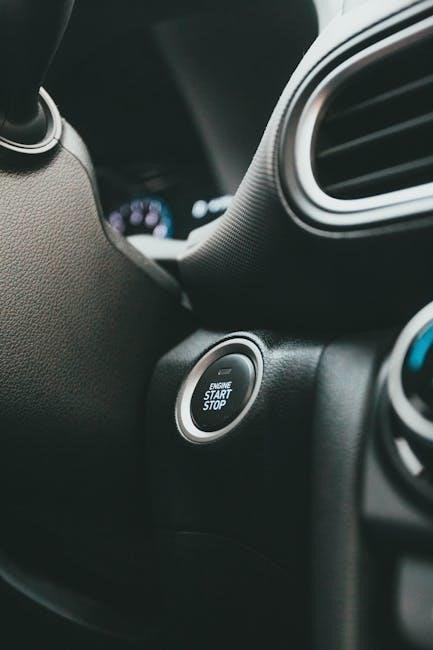
Auto start-stop technology, often interchangeably called stop-start (S&S) or even micro-hybrid technology, represents a modern automotive innovation designed to significantly improve fuel economy and reduce exhaust emissions, particularly prevalent in city driving scenarios. This intelligent system automatically powers down the vehicle’s internal combustion engine whenever the car comes to a complete standstill, such as at intersections, while waiting in traffic jams, or during other brief halts. Its core purpose is to prevent wasteful engine idling, which consumes fuel without propulsion and generates unnecessary pollutants. When the driver signals their intent to proceed—typically by releasing the brake pedal, depressing the clutch in manual cars, or selecting a gear—the system swiftly and smoothly re-engages the engine. This sophisticated operation is overseen by advanced electronic control units that continuously assess numerous vehicle conditions, ensuring engine shutdowns occur only when deemed safe and optimal. It has become a standard inclusion in many contemporary vehicles, aiming to maximize energy efficiency and minimize environmental footprint during routine driving.
How Auto Start-Stop Functions in Vehicles
Auto start-stop systems operate by intelligently managing the engine’s power cycle to enhance overall efficiency. When a vehicle equipped with this technology comes to a complete halt, such as at a traffic light, in heavy congestion, or during short pauses, the system automatically detects these conditions. It then temporarily shuts down the engine, preventing unnecessary idling and conserving fuel. This sophisticated process relies on various sensors monitoring critical factors like vehicle speed, brake pedal engagement, steering wheel angle, and battery charge levels. For vehicles with an automatic transmission, the engine typically stops when the driver presses the brake pedal firmly, bringing the car to a standstill. In manual transmission vehicles, the engine often disengages when the driver shifts to neutral and releases the clutch pedal while stationary. To restart the engine, the system detects specific driver inputs. In automatics, releasing the brake pedal or pressing the accelerator usually triggers an immediate restart. For manuals, pressing the clutch pedal signals the system to swiftly reignite the engine, allowing the driver to smoothly resume motion. This seamless operation aims to make the stop-start process almost imperceptible, contributing to a greener drive.

Recognizing “Manual Restart Required” Messages
Recognizing “Manual Restart Required” messages involves observing specific dashboard alerts. These include direct “Manual Restart Required OK” prompts, “Shift to P Restart Engine”, “Please Start Engine Manually”, or “Auto Start-Stop Malfunction” displays, often following an unexpected engine cutout or rough running.
Engine Runs Badly with Manual Restart Prompt
When a vehicle’s auto start-stop system engages, an unexpected and alarming scenario can unfold where the engine begins running very badly, immediately followed by a “Manual Restart Required” prompt. This critical issue often manifests right after a brief stop, such as pausing at a drain gutter or during low-speed maneuvers, leading to a noticeable degradation in engine performance. Drivers report the engine starting to run roughly, struggling to maintain consistent operation, and frequently refusing to accept throttle input, making the vehicle unresponsive and potentially unsafe.
In such instances, the dashboard typically displays an urgent “Manual Restart Required OK” message, compelling the driver to take immediate action. Attempting to restart the engine can further reveal complications, as the starter might continually engage without successfully igniting the engine, or the engine may continue to run roughly even after multiple restart attempts. This often necessitates manually rotating the key to specific positions or shifting to Park before a successful restart can be achieved, highlighting a significant malfunction within the auto start-stop system’s integration with engine management. This problematic behavior underscores a need for prompt diagnosis to ensure vehicle safety and reliability.
“Shift to P Restart Engine” Dash Alerts
A frequent and concerning issue encountered by drivers with auto start-stop technology is the sudden appearance of a “Auto StartStop Shift to P Restart Engine” message on their dashboard. This alert typically occurs when the vehicle is stationary, for instance, at a red light, and the auto start-stop system has engaged, causing the engine to turn off. Instead of a seamless restart upon lifting the foot from the brake or engaging the clutch, the system fails to re-engage the engine automatically.

Upon receiving this critical notification, drivers often hear accompanying chimes, drawing immediate attention to the malfunction. This forces them to manually intervene, often in inconvenient and potentially hazardous situations, such as the middle of a busy intersection. The required action involves shifting the transmission into Park (P) and then manually restarting the engine using the ignition. This unexpected manual restart requirement not only disrupts the intended convenience of the auto start-stop system but also highlights a significant operational glitch, indicating that the vehicle’s internal logic or components responsible for the automatic restart sequence have failed to function as intended, necessitating driver intervention.
Clutch Pedal Restart Failure Symptoms
When driving a manual transmission vehicle equipped with auto start-stop technology, a common and frustrating symptom of malfunction involves the clutch pedal failing to initiate an engine restart. Typically, after the engine has automatically shut off at a stop, pressing the clutch pedal should seamlessly bring the engine back to life. However, users report instances where this action yields no response, leading to a “Manual Restart Required” message appearing on the dashboard. This indicates that the system has failed to detect the clutch input correctly or is otherwise inhibited from restarting the engine automatically.
Furthermore, the problem can escalate beyond just the initial failure. Even after receiving the manual restart prompt and attempting to turn the ignition, some drivers find that the engine requires multiple attempts to fire up. This intermittent issue suggests a deeper problem, possibly with clutch position sensors, the battery management system, or the starter motor itself, hindering the expected smooth operation. While parked with the parking brake engaged, the system might even specifically instruct the driver to “push the clutch pedal to restart,” yet this command often precedes the same failure, forcing a full manual ignition cycle. Such symptoms render the auto start-stop feature more of a hindrance than a convenience for manual car owners, disrupting the flow of driving.

Engine Cut Out While Driving Incidents
A highly concerning symptom associated with auto start-stop system malfunctions occurs when the engine unexpectedly cuts out not just at a standstill, but actively while the vehicle is in motion. This alarming incident, such as a 2017 Fiesta ST Line experiencing an engine cut-out while driving in 3rd gear, immediately triggers a “Auto StartStop Manual Restart Required” message on the information display. Such an event necessitates the driver to bring the vehicle to a complete stop as quickly and safely as possible before attempting to restart the engine manually.
Unlike the more common scenario where the engine fails to restart after an automatic stop, an engine cutting out during active driving presents a significant safety hazard and a severe disruption to vehicle control. This indicates a critical failure within the system, potentially related to sensor misreadings, power delivery issues, or an erroneous command from the auto start-stop module. The unexpected loss of power requires immediate driver intervention, highlighting a malfunction that extends beyond mere inconvenience, demanding a full manual restart to regain operational control of the vehicle.
“Please Start Engine Manually” Notifications
Notifications displaying “Please start engine manually” on the instrument cluster are a common alert drivers encounter when their auto start-stop system fails to restart the engine automatically. For instance, owners of vehicles like a 2017 Porsche Macan S have reported this specific message appearing after the car enters auto start/stop mode at a stop. Instead of the engine seamlessly restarting when the brake pedal is released or the clutch is pressed, the system prompts the driver for manual intervention. This message signifies that the automated restart function has been bypassed due to a detected issue, requiring the driver to take deliberate action. The typical procedure involves shifting the vehicle back into Park (or Neutral for manual transmissions) and then manually turning the ignition key or pressing the start button to bring the engine back to life. Such a notification indicates a temporary or persistent fault within the stop-start system, preventing its intended autonomous operation and demanding direct user input to resume driving. It’s a clear signal that while the system attempted its function, it couldn’t complete the restart sequence independently.
“Auto Start-Stop Malfunction” Displays
When a vehicle’s auto start-stop system detects a significant internal fault, an “Auto Start-Stop Malfunction” display alerts the driver. This critical message frequently accompanies a “Manual Restart Required” prompt, signaling a failure in the automated engine shutdown and restart sequence. For instance, a Bronco recently turned on, ran for approximately 15 seconds, then shut off, immediately showing this “auto start/stop malfunction” display. This alert indicates a deeper system issue, not just a missed auto-restart. Unlike simpler manual restart requests, a malfunction suggests problems within the system’s hardware, software, or sensor network. While manual restarting might allow continued driving, as the Bronco did for 30 miles, this display serves as a vital diagnostic flag. It confirms the system isn’t functioning as designed, necessitating inspection to resolve the underlying malfunction.
Truck Starts Then Turns Off with Manual Restart
A concerning symptom observed in vehicles equipped with auto start-stop technology is when the engine initially starts, reaches a certain RPM, and then abruptly shuts off, immediately prompting a “Manual Restart Required” message. This scenario indicates a critical failure in the system’s ability to maintain engine operation post-start. For example, one user reported turning on their truck, seeing it rev to 1000 RPM, only for it to turn off moments later. Upon attempting to restart, the same pattern repeated, displaying the auto start-stop logo with an arrow and the “manual restart required” notification. Similarly, a Bronco started fine and ran for about 15 seconds before cutting out, presenting an “auto start/stop malfunction” along with the manual restart instruction. Such incidents suggest that even if the initial ignition is successful, the auto start-stop system, or a related component, is preventing the engine from sustaining operation. This forces the driver to manually intervene, highlighting a significant disruption in the intended automated sequence, often pointing towards underlying electrical or sensor faults that impact engine stability immediately after startup.
Intermittent Cold Start Failure
Intermittent cold start failure is a frustrating symptom where a vehicle struggles to ignite the engine reliably when it’s been off for an extended period, particularly in cooler conditions. While auto start-stop systems are designed to manage engine restarts efficiently, a malfunction can manifest as difficulty starting from a cold state. Owners report situations where, even independent of the auto start-stop engaging at a stop, the initial cold start of the day becomes problematic. For instance, some drivers experience instances where pressing the clutch pedal to restart the car, even from cold, fails to ignite the engine on the first attempt. The dashboard might then display a “Manual Restart Required” message, and the ignition system might demand two or more attempts before the engine finally catches and runs. This unreliability upon cold start suggests underlying issues beyond just the typical stop-start cycle, possibly pointing to sensors, fuel delivery, or ignition components struggling in colder conditions, or an inadequate battery capacity for the initial strong crank needed. The intermittent nature means it doesn’t happen every time, making diagnosis challenging but highlighting a persistent flaw in the vehicle’s starting sequence, demanding manual intervention.
Common Causes for Manual Restart Requirement
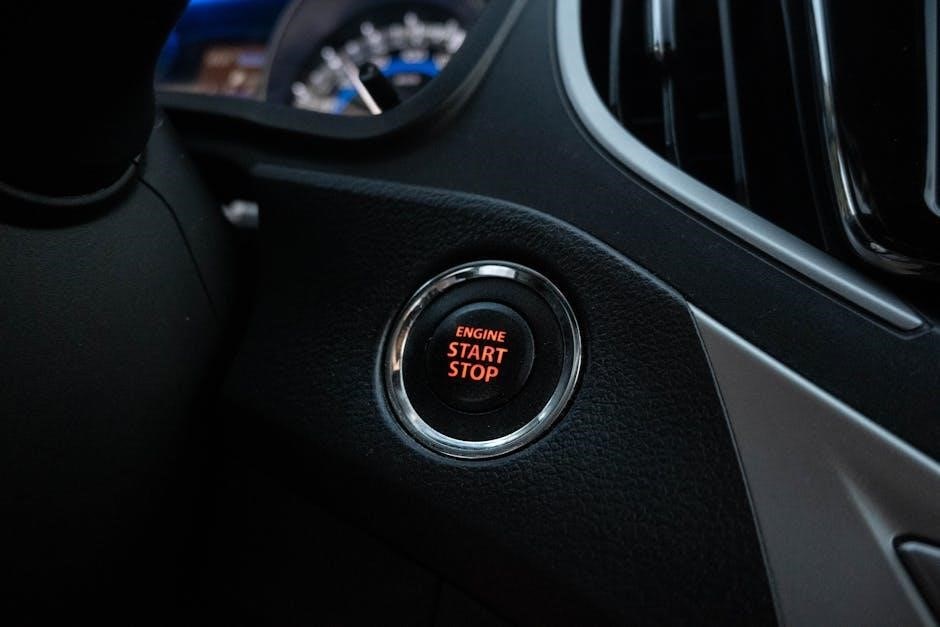
Manual restart prompts often stem from Battery Management System (BMS) issues, even with semi-new batteries. A dead auxiliary battery can also be a culprit, alongside intermittent problems occurring specifically on warm engine restarts, indicating complex system malfunctions.
Battery Management System (BMS) Issues
The Battery Management System (BMS) is fundamental to the reliable operation of auto start-stop features. Often, when drivers face “manual restart required” messages, the BMS is implicated. This system constantly monitors the battery’s state of charge, health, and temperature, which is crucial for the frequent engine shutdowns and restarts characteristic of stop-start technology. A faulty or miscalibrated BMS can incorrectly assess the battery’s readiness, leading the vehicle to disable the auto start-stop function and prompt a manual restart. Even after attempting a BMS reset, as some owners have noted, the auto start-stop system might only function briefly before reverting to malfunction. This indicates that a simple reset may not always resolve the root cause, which could be related to faulty sensors within the BMS or persistent calibration errors. Instances where OEM-grade, start-stop compatible batteries are installed, yet the “manual restart required” notifications persist, further highlight the complexity of BMS-related problems, compelling drivers to manually intervene.
Semi-New Battery Age and BMS Performance
A “semi-new” battery can still cause significant issues for the Battery Management System (BMS), leading to “manual restart required” messages. Owners often report that after a BMS reset, auto start-stop works only briefly, perhaps twice, then fails, requiring manual restart. This suggests the BMS quickly deems a semi-new battery insufficient for demanding stop-start cycles, despite recent installation. The BMS uses very stringent parameters for battery health. If a semi-new battery shows minor capacity degradation or inconsistent power delivery outside its calibrated thresholds, the BMS disables auto start-stop, protecting against further degradation. Even with new, OEM-grade start-stop compatible batteries, “manual restart required” prompts can persist. This indicates a complex interaction where the BMS detects subtle performance anomalies, triggering such alerts even when a battery appears fresh.
Impact of a Dead Auxiliary Battery
A dead auxiliary battery significantly impacts the functionality of a vehicle’s auto start-stop system, frequently leading to “manual restart required” messages. Modern vehicles with start-stop technology often utilize two batteries: a main battery for engine cranking and an auxiliary battery to power accessories and maintain vehicle electronics during engine-off phases. If the auxiliary battery is dead, the system cannot reliably maintain power to essential components, such as the infotainment system, climate control, or even critical sensors, while the main engine is off. This lack of stable power prompts the Battery Management System (BMS) to disable the auto start-stop feature as a protective measure, demanding a manual restart to prevent potential electrical issues or stalling. Even after replacing both the main and auxiliary batteries with OEM-grade, start-stop compatible units, and performing a battery reset, some users report the auto start-stop system still “playing tricks,” indicating that a dead auxiliary battery often leaves lingering issues or requires more extensive system recalibration.
Intermittent Issues on Warm Engine Restart

Intermittent problems specifically manifesting during a warm engine restart present a unique challenge for auto start-stop systems, frequently leading to “manual restart required” alerts; Unlike issues tied to a cold engine or a depleted battery, these occurrences are sporadic and unpredictable when the engine is already at optimal operating temperature. Drivers might experience the engine cutting out unexpectedly after a brief stop, or it might struggle to re-engage smoothly, demanding manual intervention. The elusive nature of these warm restart failures makes consistent diagnosis extremely difficult for service technicians. Reports indicate that dealerships sometimes find themselves unable to resolve such intermittent glitches, occasionally needing to consult with engineers or even suggesting aftermarket solutions like auto start-stop disablers. This suggests the root cause could involve complex software algorithms, sensor sensitivities, or electrical system nuances that are particularly sensitive to thermal conditions, rather than a straightforward component malfunction. Such subtle, yet disruptive, warm engine restart issues consistently trigger the “manual restart required” message, significantly impacting driving convenience and requiring immediate driver action, which can be frustrating for vehicle owners.

Solutions and Workarounds for Auto Start-Stop Problems
Addressing auto start-stop issues often involves manual deactivation or implementing aftermarket disablers. Troubleshooting can also reveal underlying causes. For many, simply turning off this feature provides a practical workaround for persistent “manual restart required” prompts, especially with problematic systems.
Manually Disabling Auto Start-Stop Feature
Manually disabling the auto start-stop feature is a common workaround for drivers experiencing “manual restart required” messages or other malfunctions. Many vehicles are equipped with a dedicated button on the dashboard or a setting within the infotainment system that allows the driver to temporarily deactivate the system. This often needs to be done each time the car is started, as the system typically defaults to being active upon ignition. For owners facing persistent issues, such as the engine running badly after an auto-stop, or the system failing to restart the engine, manually turning it off provides immediate relief. It effectively bypasses the frustration of unexpected engine cut-outs or the need to restart in busy intersections, as reported by a 2017 Escape owner. While not a permanent fix for underlying problems like Battery Management System (BMS) issues or an aging auxiliary battery, it offers a practical solution to avoid the inconvenience and potential safety concerns of a malfunctioning auto start-stop system. This manual intervention allows drivers to regain control and ensure a consistent driving experience without relying on a feature they perceive as unreliable or problematic. It’s a simple, immediate action to prevent the system from engaging and causing further “manual restart required” alerts.
Using Aftermarket Auto Start-Stop Disablers
Aftermarket auto start-stop disablers provide a more permanent and convenient solution for drivers experiencing persistent “manual restart required” issues or a general dislike for the system. Unlike manually turning off the feature with each ignition cycle, these devices typically plug into the OBD-II port or integrate into the vehicle’s wiring, effectively disabling the system automatically upon startup. This eliminates the frustration of constant manual intervention and ensures the auto start-stop feature remains inactive, preventing unexpected engine cut-outs or rough restarts. Some dealerships, unable to resolve intermittent issues like those on warm engine restarts, have even advised customers to consider these aftermarket solutions, highlighting their effectiveness. For owners who frequently encounter “Auto Start-Stop Malfunction” displays or the engine turning off unexpectedly, an aftermarket disabler offers peace of mind. It’s a popular choice for those who view the feature as a “garbage feature” and seek to regain full control over their vehicle’s operation without the hassle of recurring manual restarts or diagnostic trips.
General Troubleshooting for Stop-Start Systems
General Troubleshooting for Stop-Start Systems involves methodical investigation when “manual restart required” messages appear. First, pay close attention to specific dashboard alerts, such as “Auto StartStop Shift to P Restart Engine,” and always ensure the vehicle’s transmission is correctly engaged in Park or Neutral. If the engine runs roughly or doesn’t accept throttle after a manual restart, this indicates a deeper issue requiring professional inspection. Observe symptoms like warning chimes or unusual starter behavior, where the starter might continually run without successful engine engagement. Intermittent failures, especially during warm engine restarts or challenging cold starts, can be particularly challenging to diagnose without specialized tools. If basic attempts to restart are unsuccessful, and the system consistently prompts for manual intervention, it strongly suggests an underlying malfunction. Documenting the exact conditions, messages, and frequency is crucial. Consulting a qualified technician is often necessary to pinpoint the precise fault within the complex stop-start system, as it may involve various sensors, control modules, or other interconnected components.